Lessons Beyond the Mat
The comparison trap
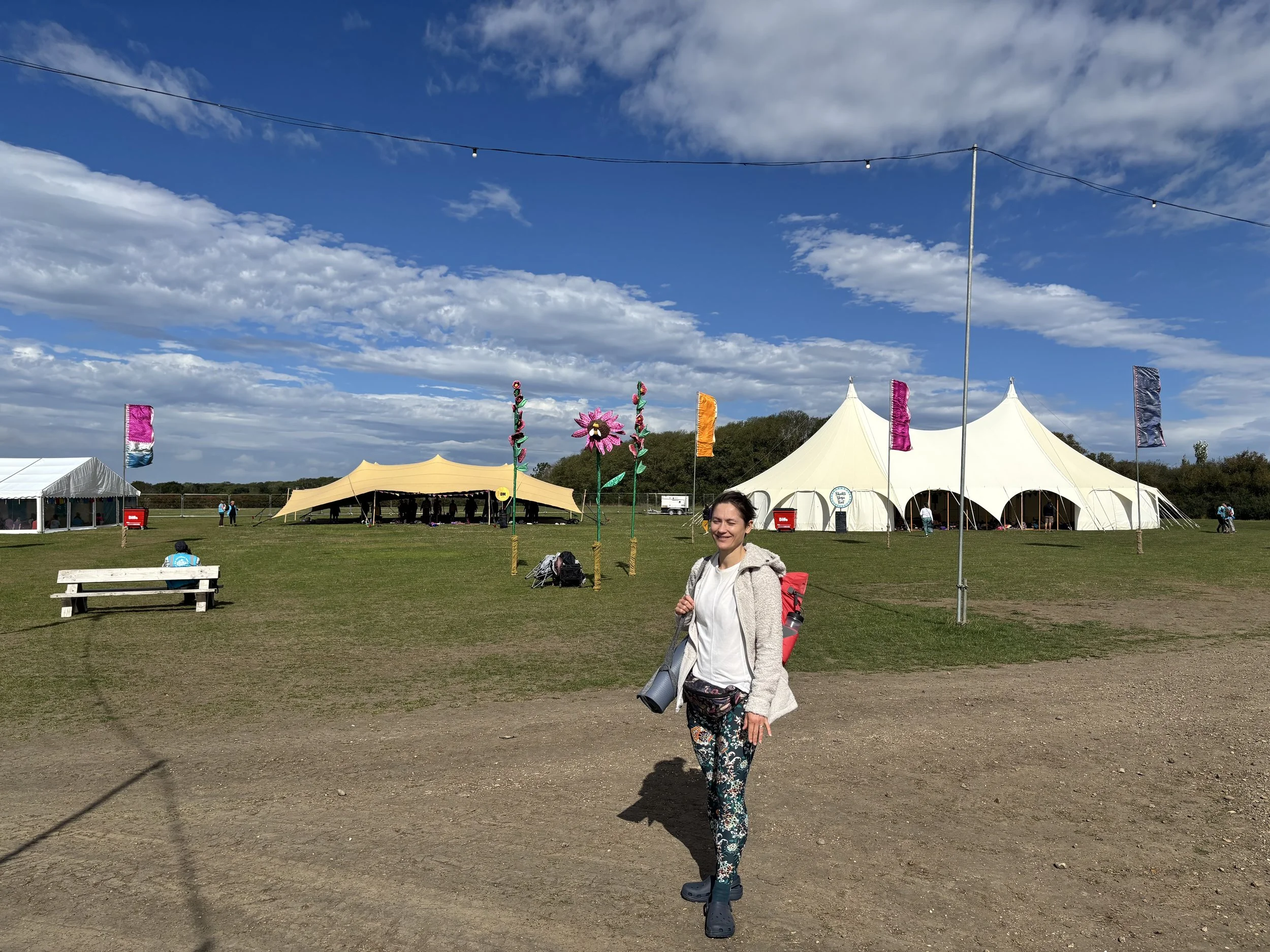
Last weekend, I went to The Big Retreat Festival. It was the first wellbeing festival I’d been to, and by the end of day one I noticed something happening in my mind.
I was comparing.
The activities, the teaching, the atmosphere, the organisation, almost everything was being compared with the World Yoga Festival, which I’ve been to several times. And I wasn’t enjoying the comparisons, as The Big Retreat was coming up short.
But then I realised something: the festival wasn’t necessarily the problem, my expectations were.
The Big Retreat is a wellbeing festival. It never claimed to be a yoga festival. And it was in its first year, whereas the World Yoga Festival has had years to learn, refine and work out what works. So why was I expecting the two to be the same?
This is where my yoga practice came in.
One of the ideas in the Yoga Sutras is yogaś citta-vṛtti-nirodhaḥ — often translated as the settling of the fluctuations of the mind. Our minds are constantly thinking, comparing, judging and creating stories about what is happening. And it’s very easy to mistake those thoughts for reality. I could have carried on down that path for the whole weekend, collecting evidence that this festival wasn’t as good.
Instead, I tried to do what yoga has taught me to do: Notice. Pause. Get curious.
Ah. I’m comparing. Why?
From then, nothing about the festival changed, but my perspective had and I enjoyed the rest of the weekend much more. It reminded me that sometimes it isn’t the situation itself that creates our distress. It’s the story we tell ourselves about it.
Yoga doesn’t mean stopping every thought. It gives us the opportunity to notice what’s happening in our minds, and create enough space to choose how we respond.
That, to me, is yoga extending far beyond the mat.
Yoga for the eyes
When we think about improving our health, we tend to think about better food, more movement, better sleep and managing stress.
But how often do we think about working on our vision?
I spend hours in front of a screen, and by the end of the day I can feel it. My eyes feel tired and my brain can feel overloaded. Not necessarily a headache, but a sense that I’ve simply had enough visual stimulation. It’s easy to forget how hard our brains are working.
That makes me wonder: is this why I often close my eyes when I practise yoga, without consciously thinking about it?
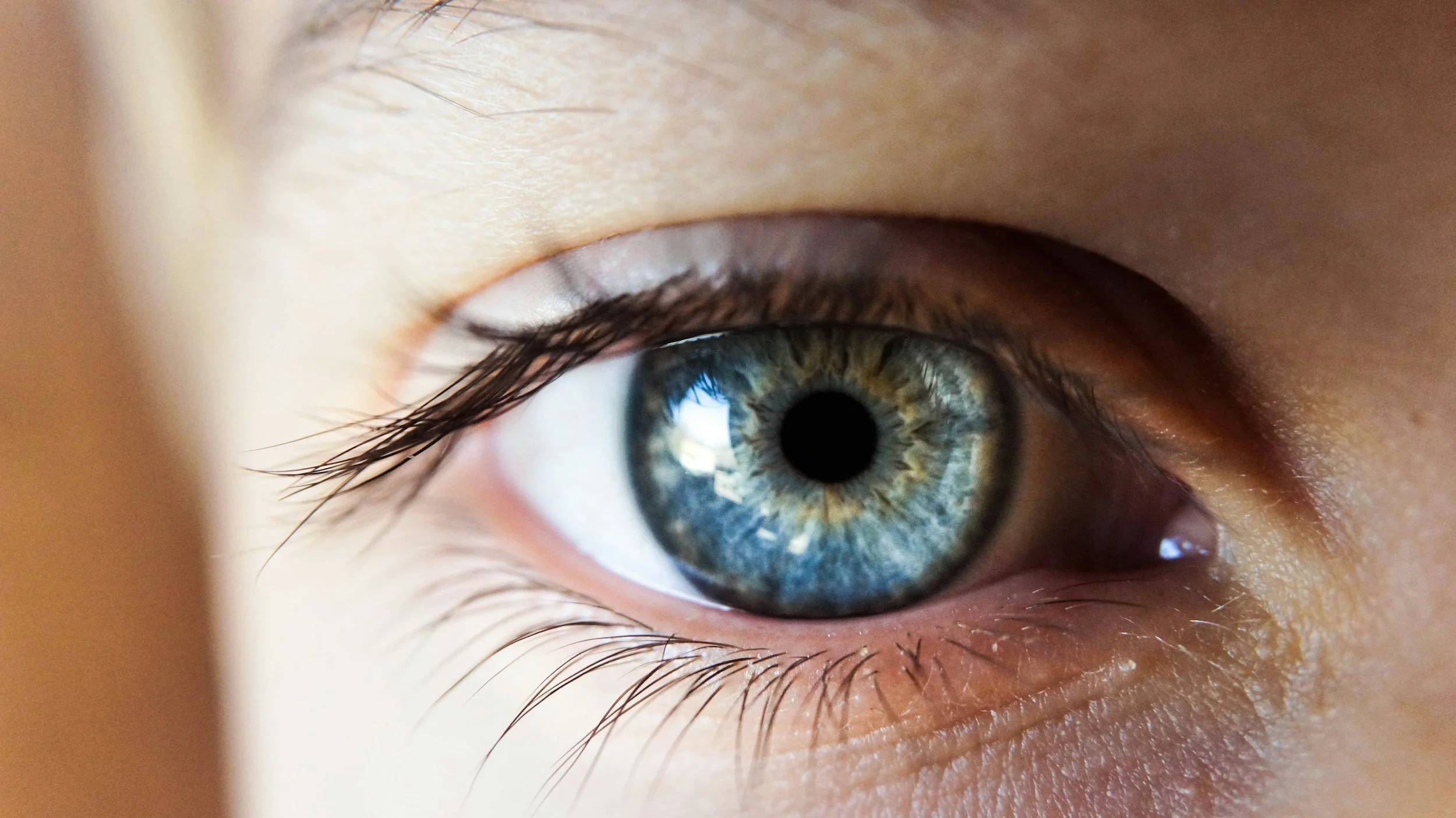
Vision isn’t simply about how clearly we can see. Our visual system is constantly processing information, helping us focus, track movement, judge distance and coordinate what we see with how we move.
That matters whether you’re sitting at a desk or playing sport.
For athletes, visual skills can influence reaction, coordination, tracking and spatial awareness. For those of us spending much of the day at a screen, prolonged near-focus and staring at a fixed point can contribute to digital eye strain, fatigue and difficulty concentrating.
So I’ve started paying more attention to my eyes and it’s one reason I include simple eye exercises in my yoga classes.
Moving the eyes in different directions, changing our focus and occasionally giving them a proper rest takes only a few minutes.
It’s simple, practical and costs nothing.
Your eyes aren’t just helping you see, they’re feeding your nervous system a constant stream of information. In a screen-heavy, fast-moving world, giving your visual system a chance to move, refocus and reset could be more important than you think.
Recovery takes practice
Today’s workout was brutal. Crossfit Hero DVB. Look it up if you’re unsure. Medicine-ball runs, wall balls shots and rope climbs. The sort of session where the physical challenge becomes a mental one: keep going when everything is telling you to stop.
And strangely, that bit is familiar territory for me. I know how to push. I know how to find another gear when my legs are burning and I know I’ve still got work to do. There’s something quite reassuring about having a job to do and getting on with it.
Stopping is different.
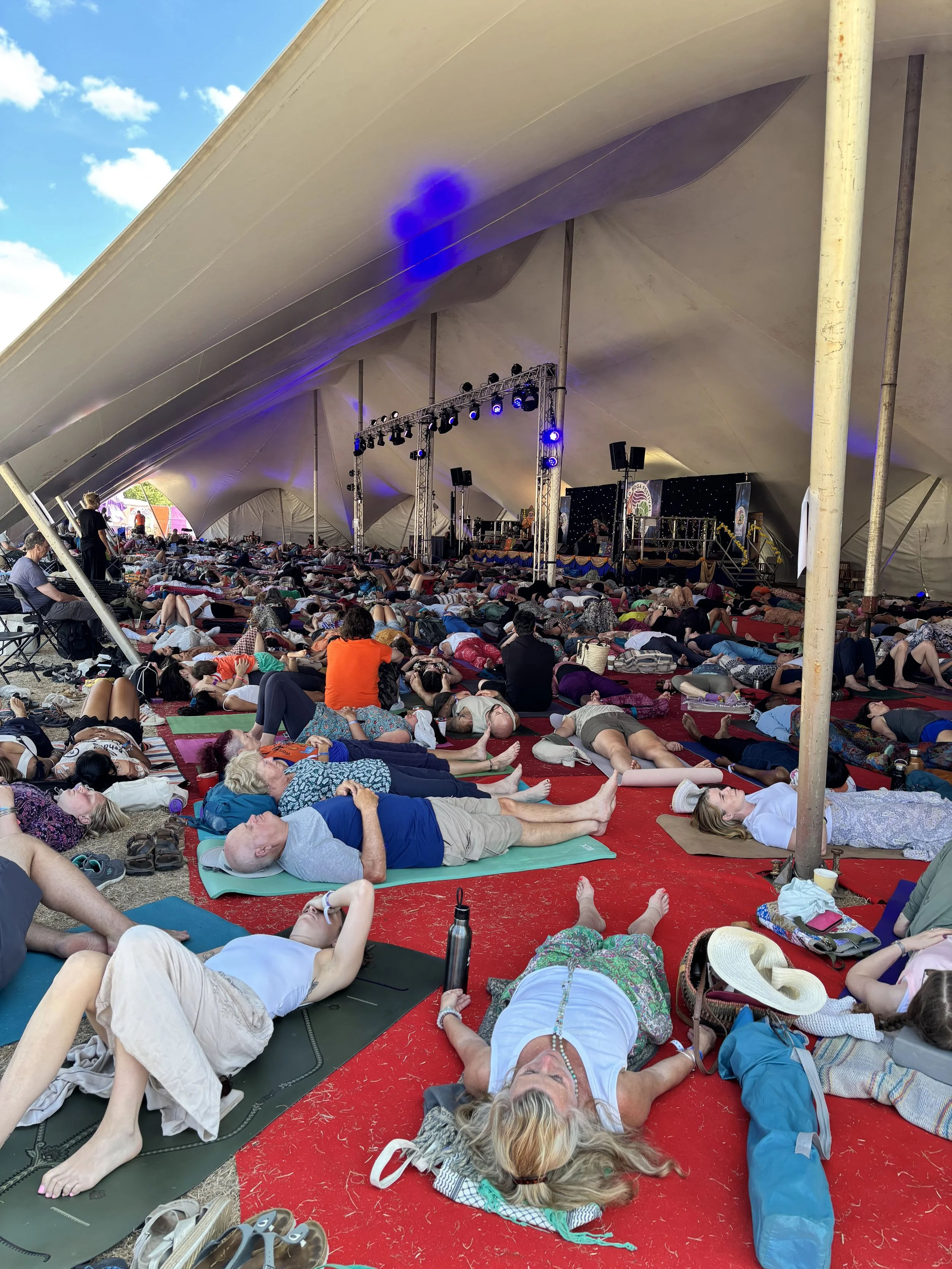
After a workout like this, recovery is crucial. But my instinct isn’t necessarily to stop. It’s to keep moving, keep busy, get on with the rest of the day. Today, I decided to do the opposite. I went into my yoga room, put a bolster underneath my knees and lay down on my Shakti mat in Savasana.
At first, I used my breath to help me settle. Inhale for 4, exhale for 8. Gradually, I could feel my body becoming heavier against the floor. The workout was still there. The pulse. The warmth. The energy running through my body. But I didn’t need to do anything with it. I just lay there.
And that was the interesting bit.
Because Savasana and I have a complicated relationship. There are days when lying still for one minute feels almost impossible. My body is restless. My mind is busy. I’m irritated, agitated and thinking about all the things I need to do.
But today, stillness was exactly what I needed. The effort started to drain away. My breathing slowed. My body softened. And eventually there was nothing to achieve, nowhere to go and nothing I needed to fix. Twenty blissful minutes of being supported by the floor.
It reminded me why I value yoga beyond the physical practice.
Yoga gives you a toolkit. Sometimes the tool you need is strength. Sometimes it’s movement. Sometimes it’s the ability to push through something difficult.
And sometimes the skill is recognising that you don’t need to push at all.
For me, that might actually be the harder lesson.
I spend a lot of time asking my body to do more.
Today, the most useful thing I could do for it was ask it to do nothing.
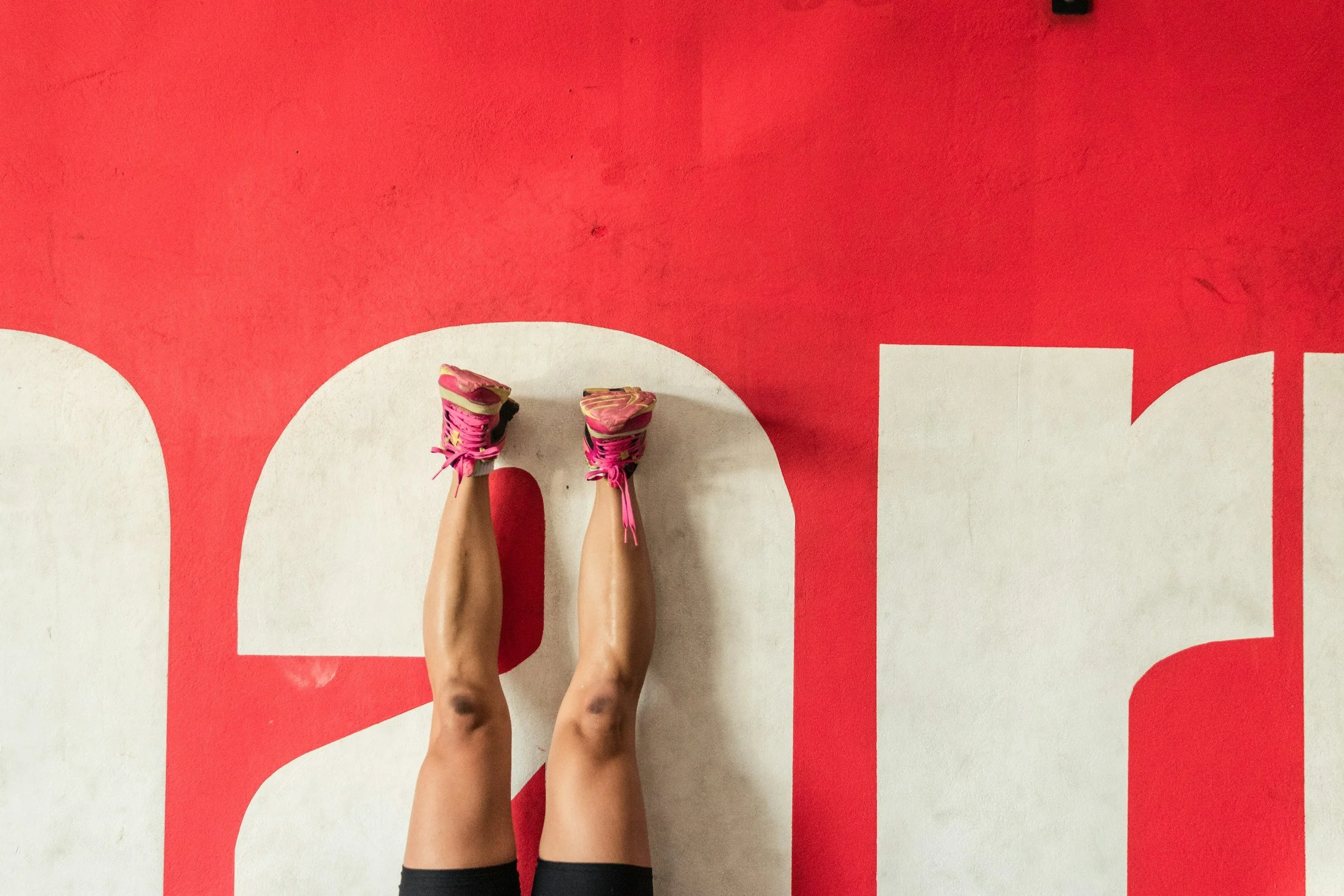
From rope climbs to legs up the wall
I’m sure you’ve been there.
Round two of five. Your legs have turned to jelly and you’re staring down the remaining three rounds thinking: How am I going to get through this?
Five rounds. Two-minute intervals, with three minutes’ rest between each. Two rope climbs, followed by max calories on the Echo Bike. If you’ve never experienced an Echo Bike, you’re lucky. If you have, you’ll know exactly the particular kind of misery I’m talking about. By the time I got onto the bike, I had 1:12 left.
One minute and twelve seconds.
When you’re pushing as hard as you possibly can, that is a very, very long time.
There are workouts you forget. And then there are workouts that leave a mark. This was one of them.
By the fifth round, I was hanging on. When it finally finished, I practically fell off the bike. My legs were shaking. Everything felt completely spent.
I made it to the floor and curled into child’s pose. Not elegantly. Not as part of some beautifully constructed yoga sequence. An instinctive reaction. I just needed to disappear for a minute.
I needed to block out the noise, the people, the room. Fingertips by my heels, hands on the floor, forehead down. Letting the ground take some the weight. A few slow breaths into the back of my body. Nothing complicated. Just breathing and trying to convince my nervous system that the hard bit was over. The recovery had started.
On the drive home, I kept coming back to my breath. Long, steady inhalations. Longer exhales. Trying to let go of some of what the workout had left behind. Because sometimes the physical effort and the mental effort are difficult to separate.
When I got home, there was still a working day waiting for me. Laptop. Emails. Meetings. But before I could do any of that, I went into my yoga room.
Five minutes. Legs up the wall. My favourite recovery pose. I put a bolster underneath my hips, stretched my legs up the wall and let myself properly stop. And rather than feeling like I was lying on the floor, I tried to feel as though I was being held by it.
For five minutes, I didn’t have to perform, push, or achieve. I just had to be there. I worked with my breath again, gently making the exhale longer than the inhale. Five minutes. That was all.
When the timer went, I slowly brought myself round and headed downstairs. I wasn’t miraculously recovered. But I was different.
Energised. Re-vitalised. Ready for the day.
Sometimes training is about pushing yourself to find out what you’re capable of. And sometimes the lesson comes afterwards. Knowing when to stop. Knowing how to recover.
And knowing that recovery isn’t weakness. It’s part of the work.
I’ve made teaching yoga harder than it needs to be
Maybe you want to turn a hobby into something more. Or maybe you have a creative project to share with the world. Whatever it is, the way you tell your story online can make all the difference.
One of my more uncomfortable realisations at the festival was that I might be overcomplicating my own teaching.
I’ve been thinking about different sequences, themes and ways to make every class interesting and varied. But watching experienced teachers made, and realising the value was in how they taught, not what they taught, and question my approach.
I love Sun Salutations and a warrior flow. I know them well, and return to the time and again. So rather than constantly searching for something new, perhaps I can use something familiar as this for the foundation and focus on what really matters: observing, cueing, adapting and helping people understand what they’re doing and giving them the confidence to find what works for their own body.
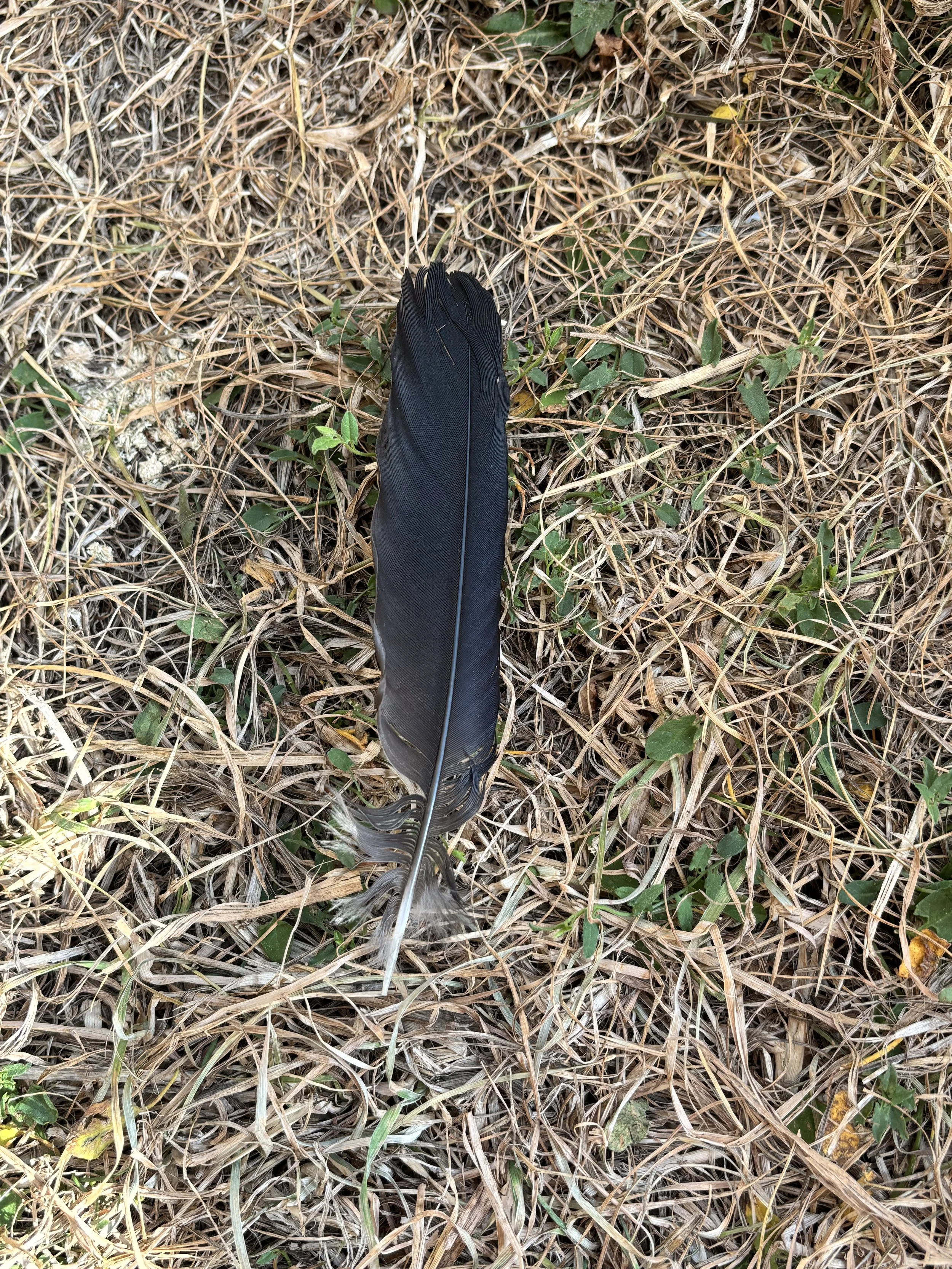
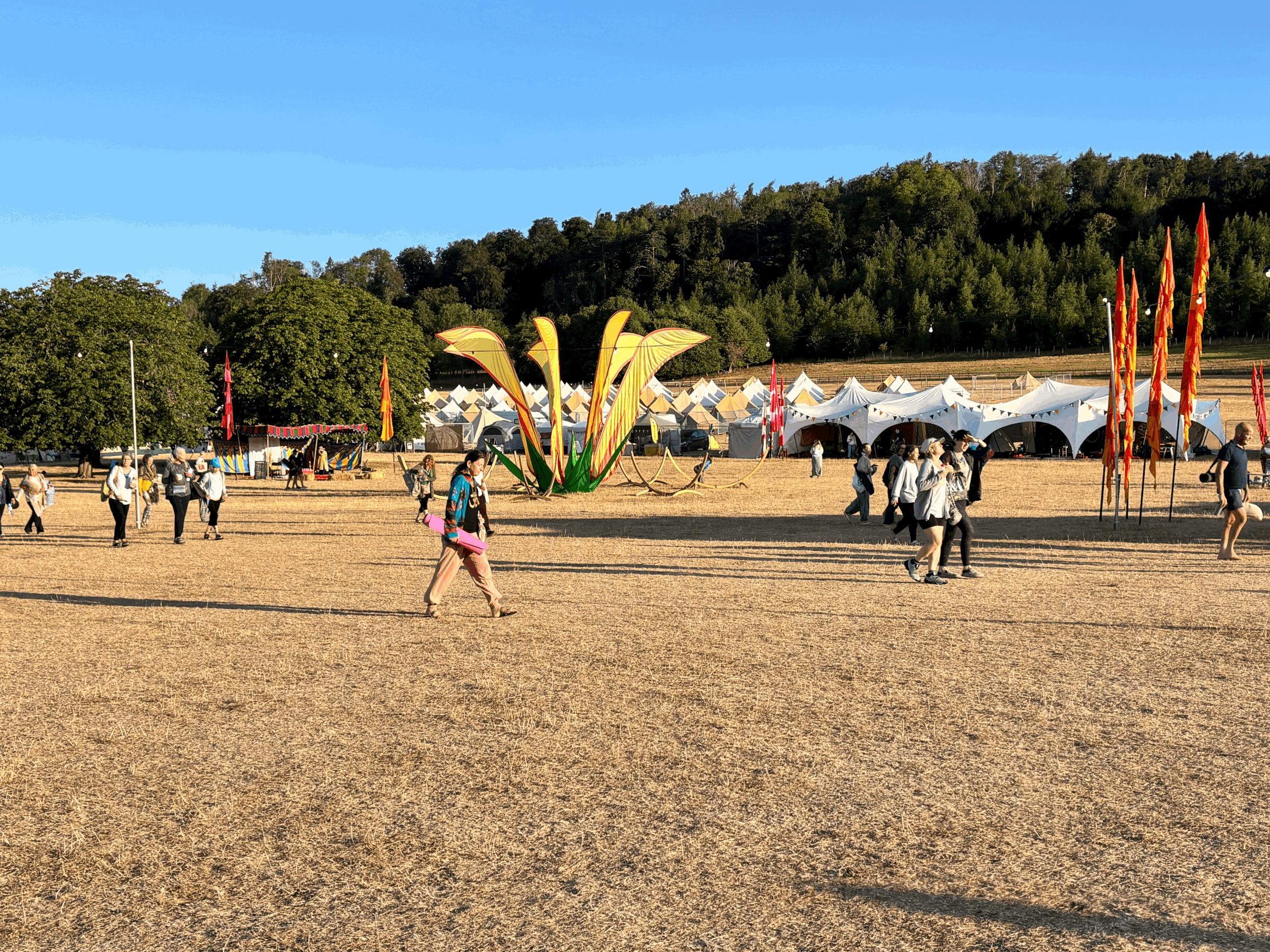
The feather in this photo felt like a good reminder. There is something powerful about taking things back to basics rather than constantly adding more.
For me, “good” yoga isn’t about making things complicated. It’s about creating the space to develop strength, focus. clarity and vitality.
And perhaps simplicity gives me more space to do exactly that.
Yoga doesn’t always need a mat
Maybe you want to turn a hobby into something more. Or maybe you have a creative project to share with the world. Whatever it is, the way you tell your story online can make all the difference.
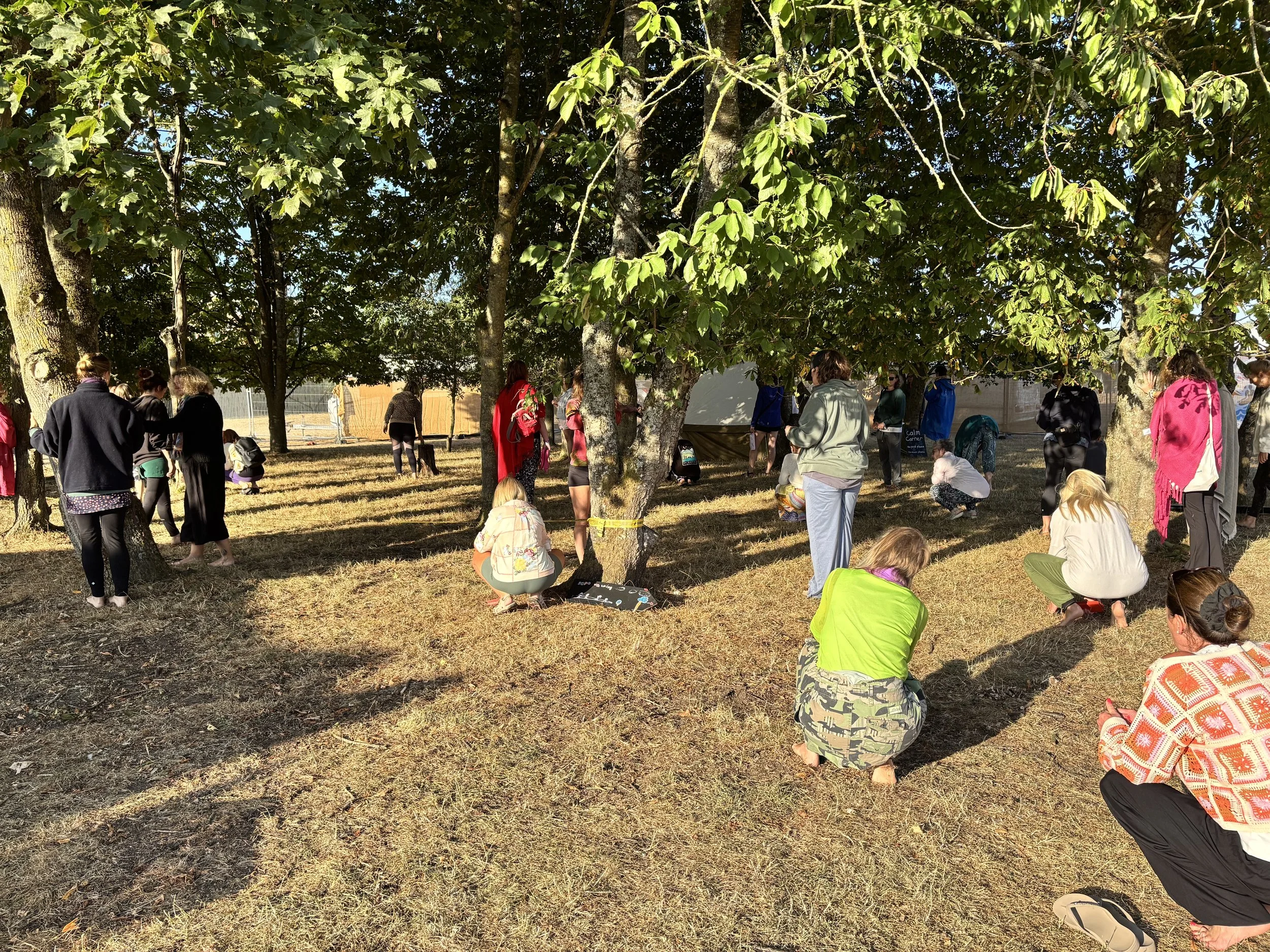
One of my favourite sessions wasn’t yoga at all, it was forest bathing.
Slowing down, moving together in silence, and really attending to what was around me felt simple and quietly powerful. If you’ve been to my classes you’ll know how much I value sensory awareness - tuning into the sights, sounds, touch and smells that shape our experience. This session gave me fresh ways to practise that.
I found myself noticing the little things: the sound of leaves crunching in my hand, the rough texture of bark beneath my palm, the mineral scent of damp earth, the sharp snap of a twig underfoot. Those details brought me fully into the moment and into my body. They also reminded me why I prefer practising outdoors on ground that isn’t perfectly flat — uneven terrain invites micro-adjustments, strengthens stability, and teaches resilience.
This week I left the mat indoors. Yoga doesn’t need a studio, four walls or even a mat. Sometimes stepping outside and simply paying attention is practice enough.
If you’re pressed for time, try this:
Spend five minutes standing barefoot in mountain pose on varied ground - grass, soil, gravel — and notice contact points under your feet.
Close your eyes for two minutes and listen: layers of sound will come forward when you’re still.
Widen your nostril with your fingers and take one slow, deliberate breath and scan for scent around you.
Small, consistent moments like this support recovery, and deliver tangible results for body and mind, which is exactly what we aim for at Stretching Horizons.
The annual ice bath
Maybe you want to turn a hobby into something more. Or maybe you have a creative project to share with the world. Whatever it is, the way you tell your story online can make all the difference.
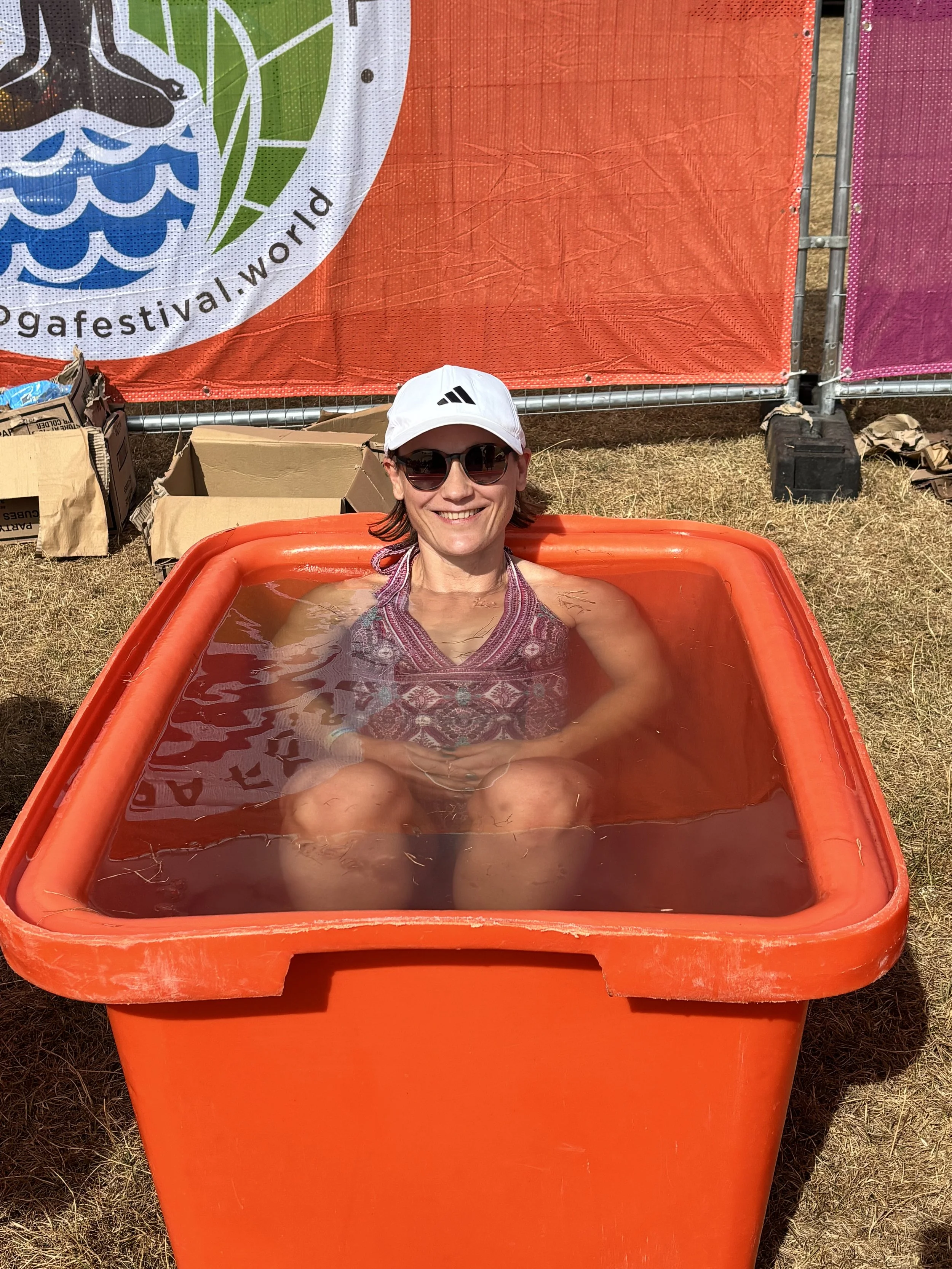
A dip in the ice bath has become my must-do whenever I’m at this festival. This year given the scorching summer we’ve had there couldn’t have been a better day for it.
Cold-water immersion has become a popular evidence-based recovery tool in sport, and I’ve been know to recover in a cold bath after a hard run when I’ve been marathon training. Research suggests it can reduce post exercise soreness and improve recovery for endurance athletes, but it may be counter-productive for those wanting to increase muscle size.
For me, the most interesting part isn’t about the cold on my skin, it’s about my breath. The instinct is to tense up and breath faster, but practising breath work through yoga allows me to very quickly slow and control my breathing, lengthening the exhale.
It brought me back to tapas, the yogic principal of discipline and working with discomfort. That doesn't always mean continuing to push through pain and discomfort, it can mean learning to stay calm when something is uncomfortable.
It doesn’t need to be fancy
Maybe you want to turn a hobby into something more. Or maybe you have a creative project to share with the world. Whatever it is, the way you tell your story online can make all the difference.
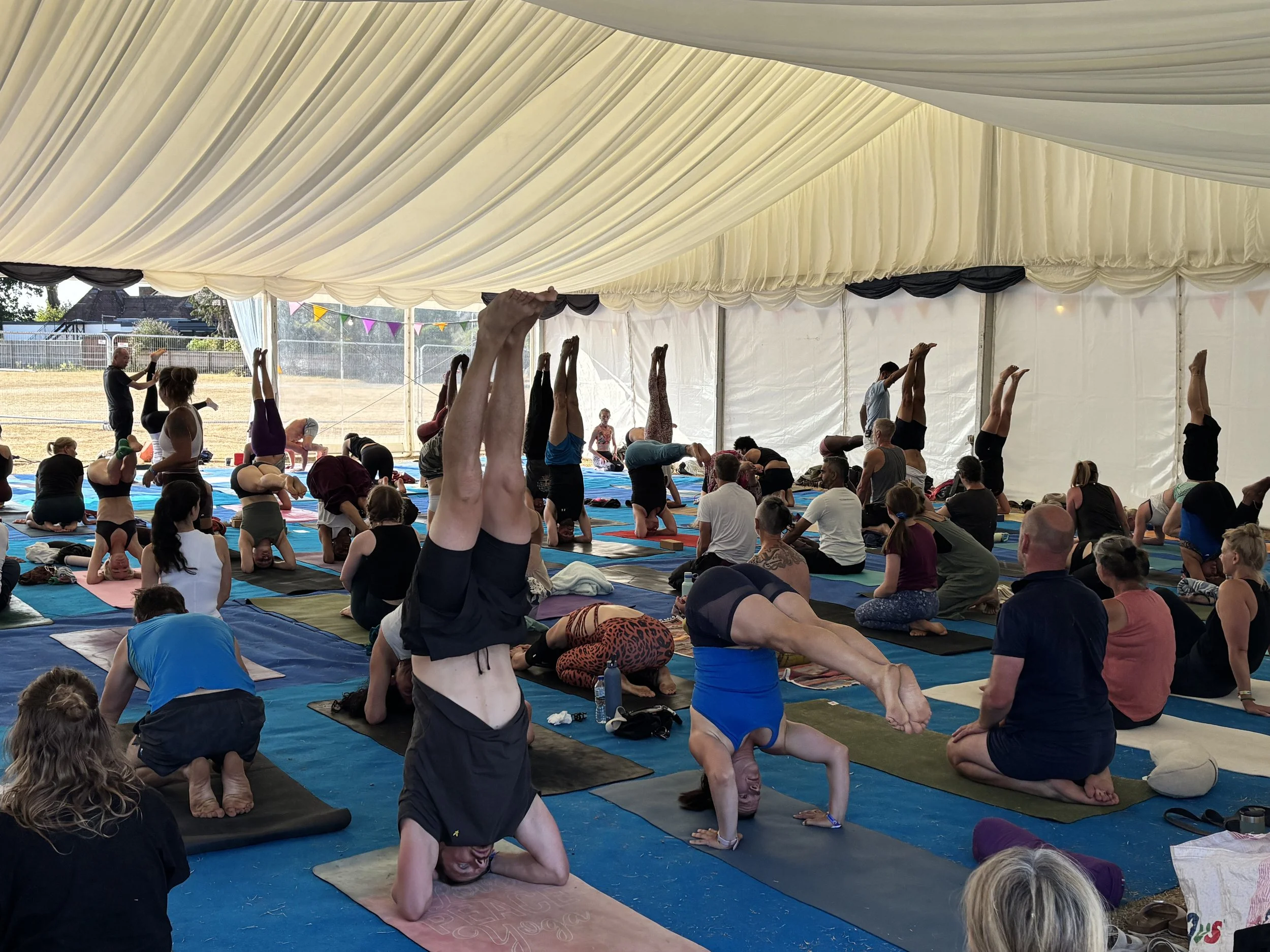
Walking around the World Yoga Festival, it would have been very easy to feel intimidated. I’m not brave enough to try a headstand without a wall behind me. There was no way I was going to let the teacher test my strength by crouching on top of my torso whilst I was in wheel (I regret not capturing that photo). An Ashtangi I am definitely not, but I love dipping in every year for the performative and entertainment aspect.
But the more classes I tried and observed, the more I realised that none of that spectacle was really the point.
Some of the sessions I loved most involved remarkably little movement. Shrugging my shoulders up and down whilst holding an inhale in a Kundalini class. The new ways I experienced moving my eyes at the start of a Sivananda class. The inclusion of some Qigong. What mattered wasn’t how the body looked but how it it felt. My shoulders dropping, my eyes feeling lighter, and the weight evenly distributed through my feet.
That was the festival’s quiet lesson, and a reminder of why I started Stretching Horizons. Yoga isn’t an audition for Cirque du Soleil. It isn’t about proving you can hit an Instagram-friendly shape. It’s a practice of curiosity and repair. It’s the tiny wins: less hunching over a desk, fewer counterproductive headaches mid-meeting.
You don’t need to be flexible, experienced, or able to balance on one elbow while wrapping your body into a pretzel shape. You just need to be willing to try.
If you’re busy, juggling work, family or training for your next race, yoga can be the thing that helps everything else work better. Short, sensible practices that restore range of motion, sharpen focus and refill your energy reserves. No pretence, no pressure, just steady progress and practical results.
Connection matters to me
Maybe you want to turn a hobby into something more. Or maybe you have a creative project to share with the world. Whatever it is, the way you tell your story online can make all the difference.
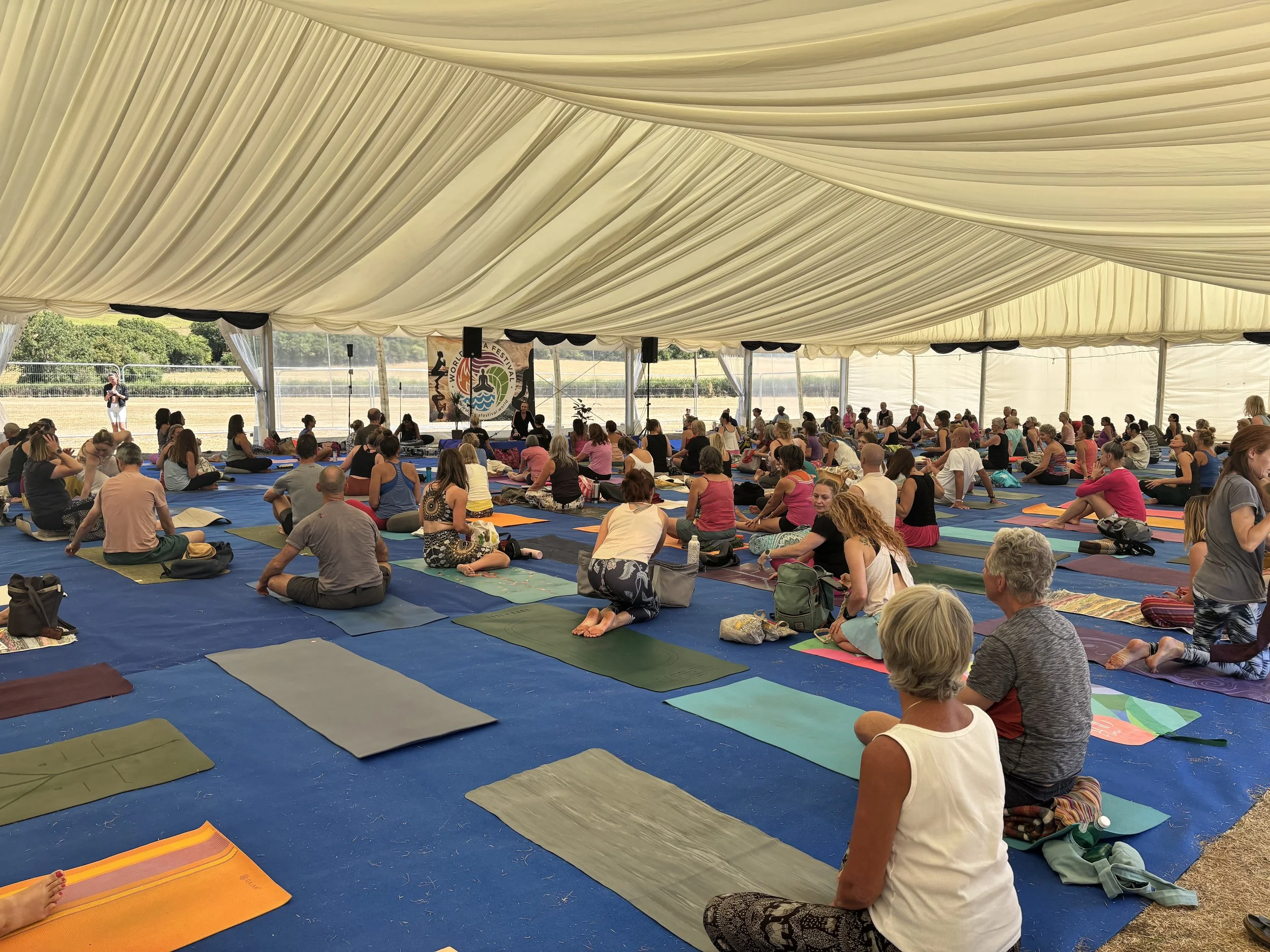
The biggest surprise at the World Yoga Festival wasn’t a trick shape or a new style, it was how powerfully certain teachers affected me. Some classes felt physically familiar, yet the right teacher made them land completely differently. I usually pick dynamic practices in the morning and restorative in the evening, but I loved one teacher’s Friday session so much that I pivoted and did Yin first thing on Saturday to experience her teaching again. It became my favourite session of the weekend. Not because the shapes were new to me, but because of how she offered them and the language she used. I realised that how something is offered can matter more than what we actually do. I tried many styles at the festival, but the sessions that stayed with me weren’t the flashiest or most demanding. They were led by people I connected with. It wasn’t the sequence I remembered so much as the way they made me feel: safe, engaged and curious. They taught with warmth, humour and authenticity, reminding me that yoga can be less about the movement that is offered and more about the teacher–student relationship and the experience we create together.
Less is more
Maybe you want to turn a hobby into something more. Or maybe you have a creative project to share with the world. Whatever it is, the way you tell your story online can make all the difference.
One of my biggest lessons from the World Yoga Festival came from an Iyengar class. We practised only a handful of shapes, holding each one far longer than I’m used to. At the time I remember thinking, “Have we actually done very much?” Yet afterwards my body felt incredible.
That stuck with me. We live in a culture that equates value with volume: more shapes, more intensity, more effort. We want efficient workouts, measurable progress and the quick fix that fits into a packed schedule. Those aims are valid. But the Iyengar lesson was a reminder that efficiency and depth are not opposites.
I noticed that holding the shape for longer gave me these benefits:
It builds specificity. Staying in a single position let me find subtle alignment cues, notice where I should tension (shoulders & jaw) make small adjustments.
It fostered a different kind of strength. Endurance in a shape isn’t just muscular, it’s neural. The nervous system learns new patterns, which can reduce injury risk and improve movement economy in sport and daily life.
It invites presence. Longer holds give the mind space to quiet habitual reactions, bracing, rushing, striving, and replace them with steady attention. That calm focus translates directly to better concentration under pressure.
For the busy person, that might seem impractical and feel uncomfortable and frustrating: who has time to linger for five minutes in a single asana? But the point isn’t to make every practice slow or long. It’s about inserting pockets of depth, a few longer holds within an efficient session, so your body and nervous system have time to respond and adapt.
I’ve weaved this into my practice, slowing down my warm up and including a couple of intentionally long holds at the end, woven into an otherwise dynamic class. The goal is pragmatic: better movement, greater resilience and more lasting results with less frantic effort.
I’m reflecting on this off the mat too. In work and life I default to “more”; more tasks, more meetings, more doing. What if progress sometimes asks for less doing and more noticing? Slowing down doesn’t mean slowing ambition. It means investing time for the body and mind to integrate, recover and perform better when it matters.
If you’re short on time, try this in your next practice: pick two shapes relevant to your priorities (hip opening, shoulder mobility, or a core-stability posture), hold each for 2–5 minutes with gentle attention to breath and alignment, and observe the difference. You might find that less rush actually gives you more space.
Stretch your limits. Live with vitality. Resilience, recovery and results don’t always come from doing more; sometimes they come from giving your body the time to respond.
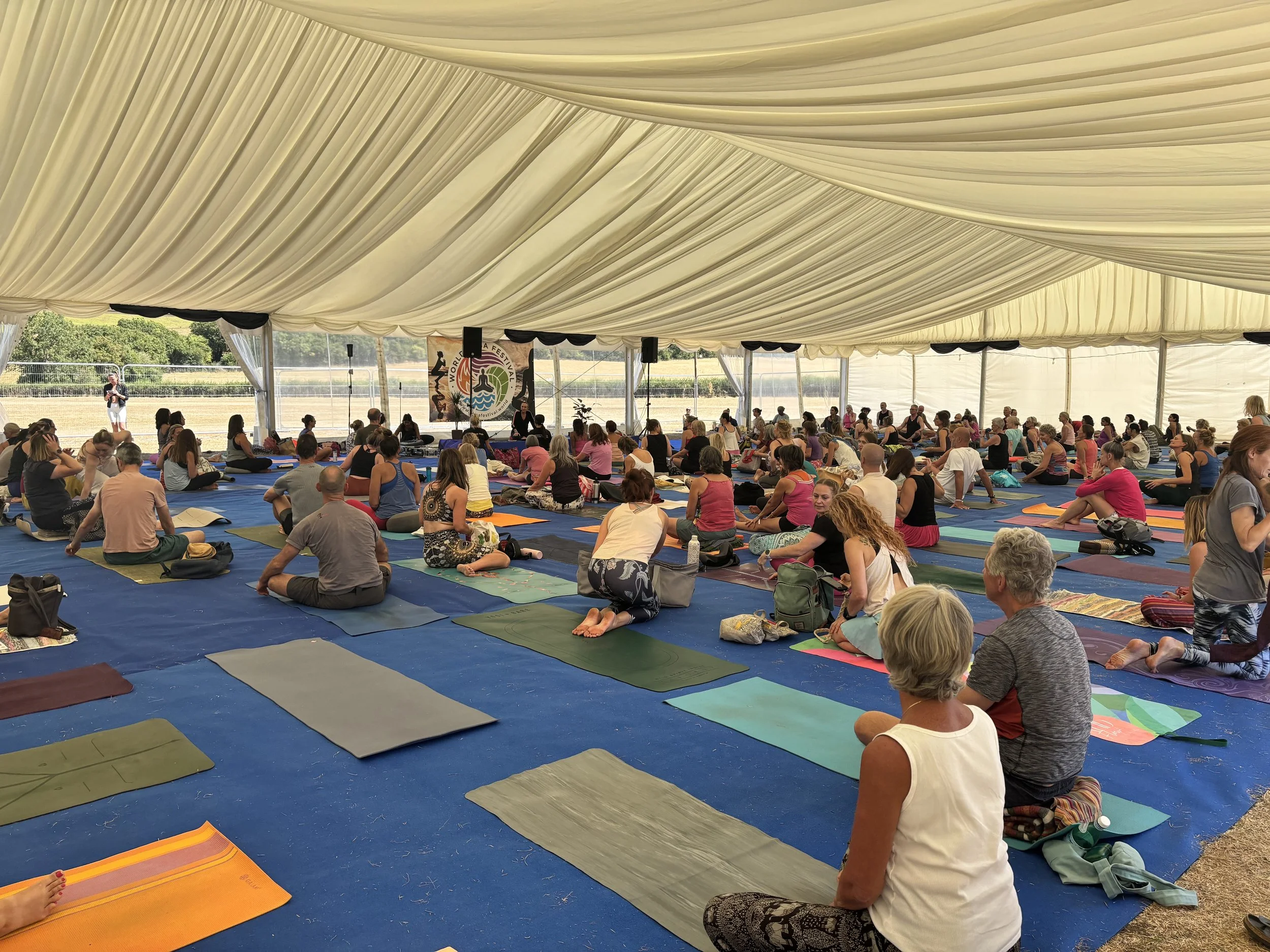
I went to a yoga festival to slow down….and nearly forgot to!
Maybe you want to turn a hobby into something more. Or maybe you have a creative project to share with the world. Whatever it is, the way you tell your story online can make all the difference.
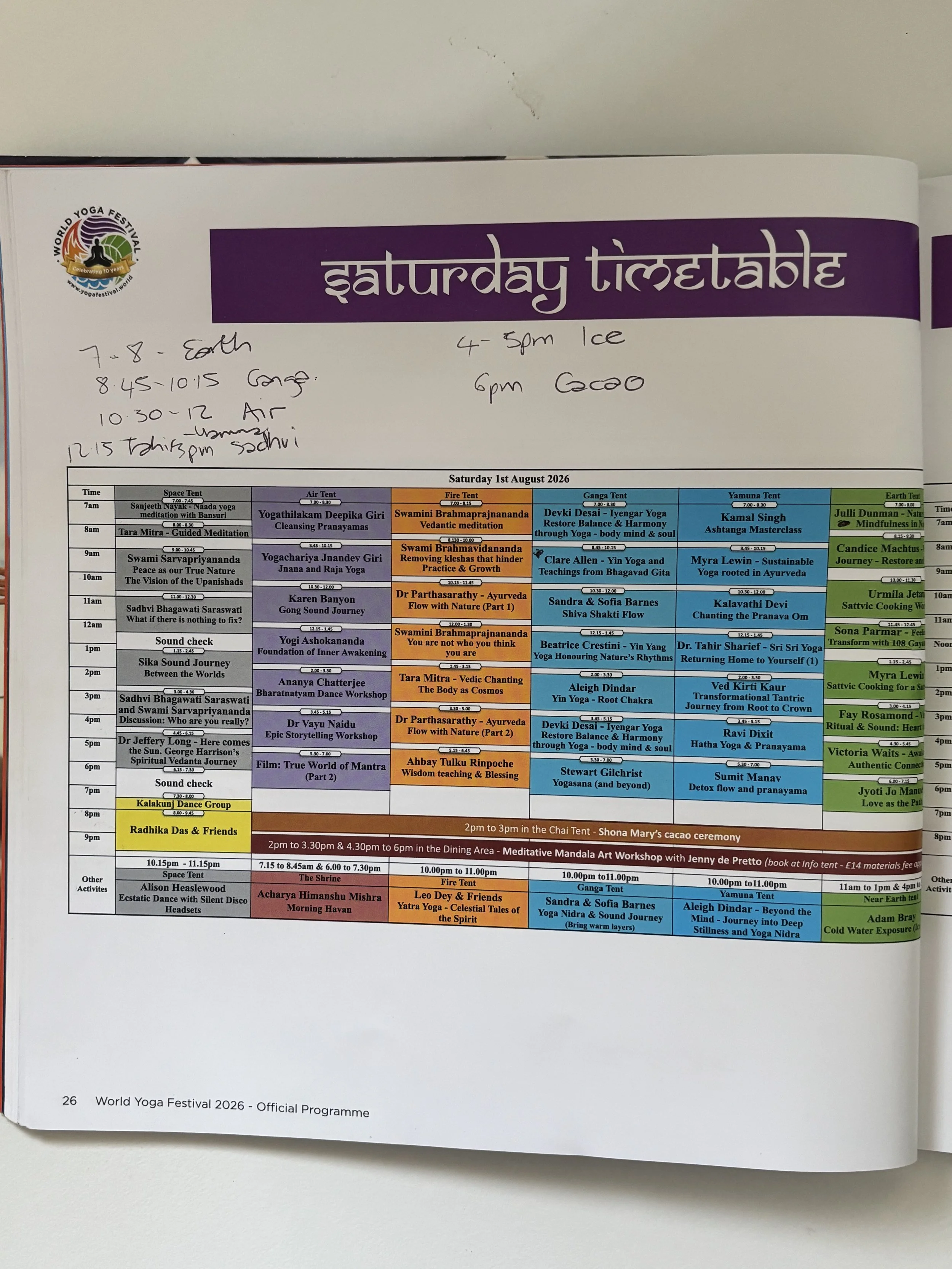
It’s slightly ironic that I found myself rushing around at a yoga festival. Anyone who knows me knows how I love a timetable. However, with so much variety to choose from, on the first day I found myself dashing from one session to the next, never really stopping to let anything settle.
It wasn’t until I sat in a Kirtan (something I hadn’t planned to attend) that I noticed myself checking the time on my phone, calculating when I needed to leave to secure a spot for the next class. In that moment I realised I’d slipped into my default mode: doing more, filling every gap, as if productivity were the point. And yet what I actually needed was the opposite, a little space to sit quietly and do nothing.
That recognition landed hard. How often do we turn up physically but live mentally somewhere else, already planning the next task, the next meeting, the next training session? The festival simply held up a mirror to a habit I practice all the time.
I’m currently exploring being present in my meditation practice, and this weekend gave me plenty of opportunity to notice when I wasn’t actually present. The useful lesson I’m learning is that presence isn’t about forcing concentration or policing the mind into silence. More often it’s gentler, simply noticing when I’ve drifted, and bringing myself back without being hard on myself.
For busy people and athletes who push for results, this matters. Presence doesn’t cost you time, it restores it. A few minutes of genuine attention can make the next task clearer, movement more efficient, and rest more restorative. The practice is simple and practical. When you catch yourself planning while you’re meant to be resting, pause. Take a breath. Let the next action arrive when it needs to.
Stretching your limits isn’t just about pushing harder, it’s also about learning when to do less, to be still, and to return, again and again, to the present.